



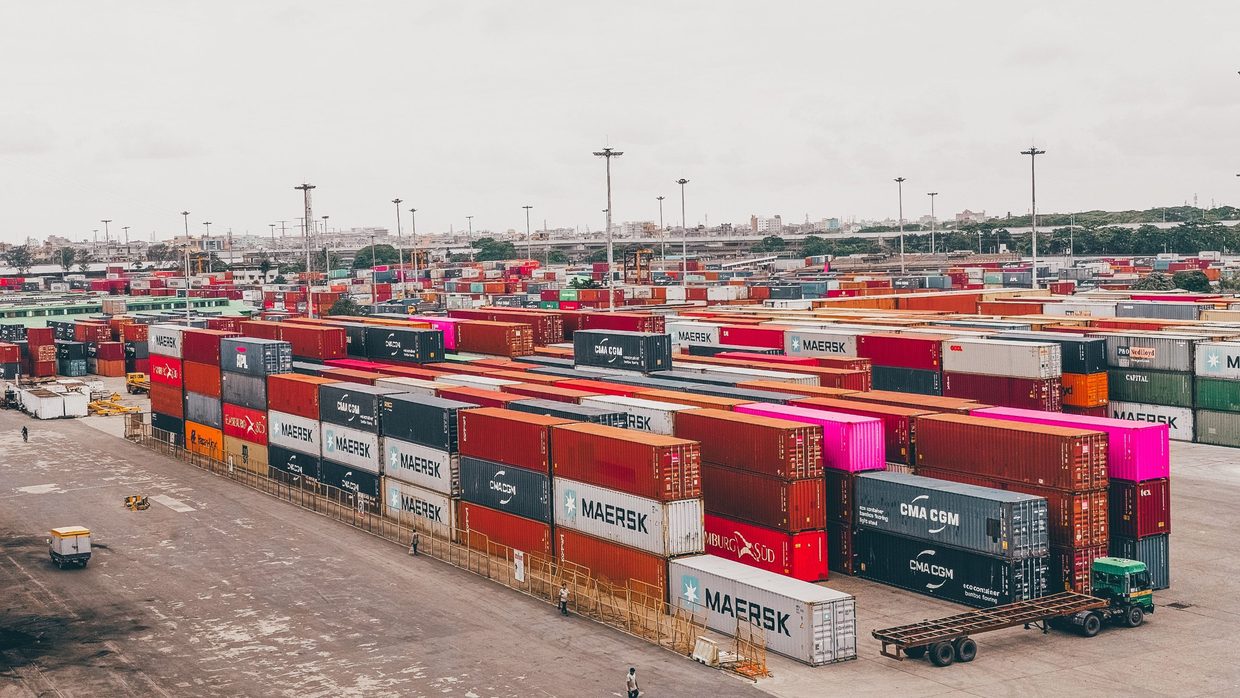
Warehouses and port terminals,
your three regimes and your exercises
The building, the goods and the quay each come under their own text, and their deadlines do not fall on the same dates. We have your teams train on their own ground, on today's threats as well as tomorrow's.
A single training session
for your three regimes.
Your three regimes each impose their own inspections and deadlines. We prepare them together, so that one session covers all three.
01The on-call line called, the chain reviewed
See details
Your alert chain sets out who notifies the emergency services, the port authority and the town hall. We call your on-call line without notice and review the actual order in which they are notified. Any reversals found go back into your instruction.
02Response time, clocked
See details
The response team trains in your own storage cells, with your own equipment. We time the deployment, and the actions that cost time are reviewed with the team the same day.
03The risks of the three regimes
See details
Your risks are split between the building, the goods and the quay, and each comes under a different text. We play them out together in a single scenario, because they happen together. Your team learns to balance them smoothly.
04Your crisis unit keeps track without the operations system
See details
The status of the quays only shows in your operations software. With the quay team, we design a way to take it over and track decisions without it, based on what the team can handle at full load.
05Your fire defence plan, reviewed with the team
See details
This plan exists and it has an author. We open it with the response team, follow its annexes out to the actual valves and access points, and note what has changed since it was last signed.
06Receiving the emergency services, checked at the gate
See details
Someone receives the emergency services and their name is written down somewhere. We call that name without warning. Three answers count: where the goods are, the status of the shut-offs and how many people are still on site.
07Reduced-staffing periods, put to the test
See details
Your on-call rota already covers every period. We pick one at random, call, and record how long it takes before someone agrees to shut down a zone.
08The goods register, checked against the aisles
See details
This dangerous goods register is kept every day by a named manager and their deputy. We take it as printed and compare it with the aisles, cell by cell. The gap is counted in pallets, it is dated, and its origin is traced back to your data entry procedure, which is then revised.
09Scenarios prepared while operations continue
See details
What comes next is prepared while your quays are still working. An anticipation function takes care of it, separate from the one handling the current hour. It ranks the scenarios and prepares, for each, the resources to commit and the trade-offs to put to management. The ranking takes in rising threats: extreme weather events and attacks targeting the supply chain, from cargo theft to organised crime approaching employees.
10The exercise of your three regimes together
See details
Your three regimes play out in the same session, with a single quay manager for all three. We observe how they prioritise and whom they listen to. Your management draws from it the priority rules it wants applied.
11The fire defence exercise, replayed
See details
These exercises have already taken place, and their reports are filed. We start again from the last one, replay the same cell with the same resources, and the gaps that have not moved go back out with an owner and a deadline.
12The first messages exercise, customers and port
See details
The crisis unit drafts its first messages to your customers and the port authority. We record how long they take to be signed off, and the sign-off process gets shorter before the next exercise.
13The warehouse without systems exercise
See details
Your quays may have to dispatch by hand during a peak period. With the team, we work out the degraded mode that keeps orders going out and then lets you catch up on data entry. Your operations know how long they can hold out that way.
14Your three trackers brought down to one
See details
Today the building, the goods and the quay feed three separate trackers. We reconcile them line by line. We spot the lines that say the same thing, and each remaining line carries its evidence and its date.
15Keeping your documents operational
See details
Your fire defence plan, your goods register and your quay instructions move at the warehouse's pace. Cells change use and teams rotate. Together with you, we keep these documents and the people who apply them operational.
From the daily record to the three-yearly exercise,
a single schedule holds them all.
Each deadline has its own pace and its own owner. The daily one rests with the team on shift, the three-yearly one with a management decision. We go over that schedule with your teams, write down what each deadline must leave behind, and run the exercise that puts them to the test.
We start there, quay by quay.- Has anyone other than its author ever opened the fire defence plan?
- Who updates the dangerous goods register, and at what time?
- When did the last fire defence exercise take place, and in which cell?
- What did the safety adviser write in their last annual report?
Three regimes intersect
on the same site.
The building, the goods and the quay each come under their own text, with its own inspectorate and its own pace. We take all three together, because your organisation is most exposed where they overlap.
| What is inspected | Who answers for it | The exercise or report expected |
|---|---|---|
| The building | The warehouse operator | The fire defence exercise at least every three years |
| The goods | The safety adviser | The annual report, available from 31 March |
| The quay | The port authority and the facility operator | The annual exercise programme, finalised at the end of the calendar year |
Five stages,
from your three regimes to the action plan.
Your teams know the scope because they defined it with us, the risks because they walked through them, the tools because they wrote them, and what holds because they tested it. The action plan comes back to them with deadlines.
A warehouse that knows how to evacuate, a quay that knows how to close.
The fire defence plan has been followed out to the actual valves and access points, and the security exercise programme for the coming year is written.
- 01An up-to-date fire defence plan: its annexes have been followed out to the actual valves and access points, and each gap found has an owner and a date.
- 02A trained response team: it has already trained in its own aisles, and its response has been timed.
- 03A goods register checked in the aisles: the gap with the document has been counted cell by cell, and its origin is written down.
- 04An up-to-date security exercise programme: it covers the coming calendar year, names who leads each exercise, and the département prefect received it before 31 December.
Does your fire defence plan exist anywhere other than in the file?
The fourteen-question self-assessment positions your plan, free of charge and with no sign-up. Reconnaissance then tells you which regime to start with.
 ®