

 ®
®
The structured analysis of decision-making under crisis
TRACE® identifies the human mechanisms that shape decisions, interactions and outcomes observed in real or simulated crisis situations. The method does not replace your after-action review: it gives it raw material and a reading grid, the same ones from one session to the next.
What we hand overA debrief run from memory always hits the same ceiling.
A crisis plays out through human mechanisms: perception, trade-offs, communication, cooperation. So it is people you need to be able to observe.
The after-action review, a legal requirement in many organizations, is almost always built from what participants recall several days later. Yet the memory of a high-pressure episode reconstructs itself, always in the same direction.
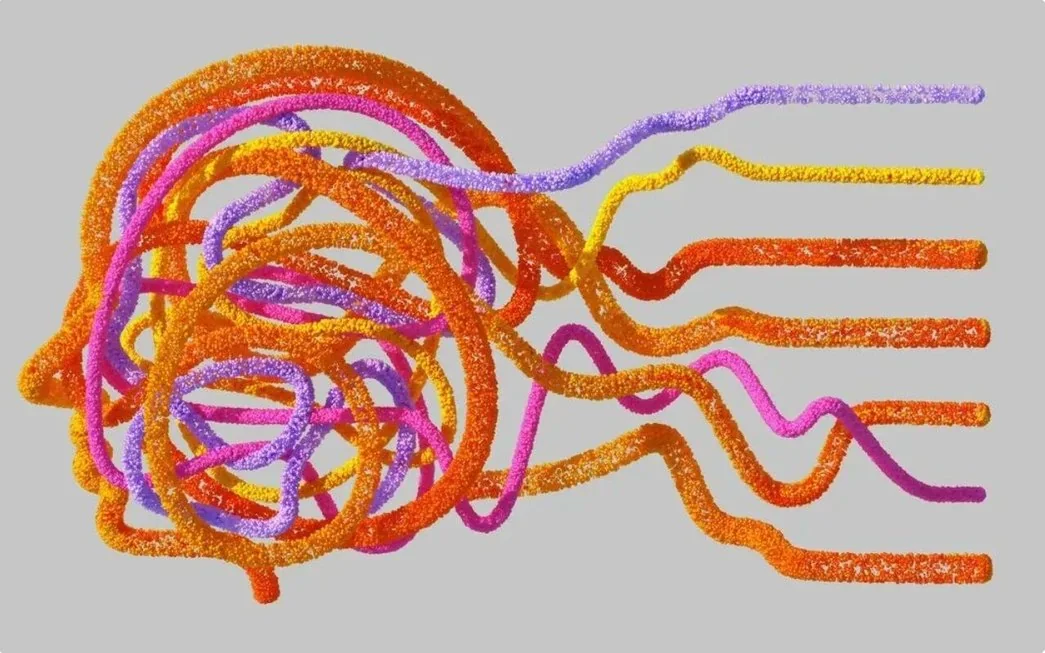
The outcome takes over
What ended up happening displaces what people believed at the time.
The group converges
The account settles around the most confident version in the room.
Hesitations fade first
Yet that is exactly where the decision was made.
® starts from the session itself, not from its recollection.
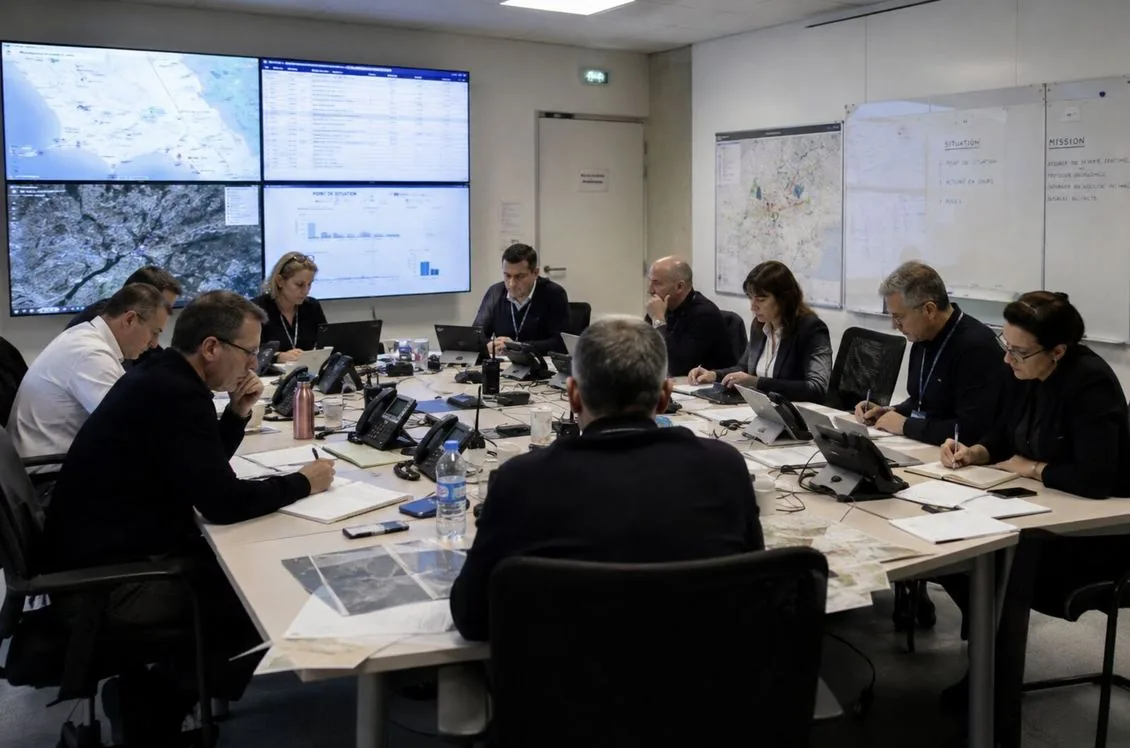
Every session is captured on video and audio. Elite sport, the armed forces and civil protection have long done the same: you record, then you review together. We know that culture from the inside - our strategic committee and our partners come in part from those worlds.
The session is then watched as it actually unfolded, rather than as it is remembered. That is where the decisions become readable: the real order of events, and what the team knew at each moment.
Added to this is what memory does not retain: response times, how information travels around the room, and the human factors and cognitive biases that weighed on the decisions. The terms of the debrief are agreed with you before the session.
One reading grid, applied identically to every session.
A session produces a great deal of material and very few reference points. The five axes are there to read it the same way every time: each axis breaks down into criteria, and each criterion is read on a scale whose levels are described in advance.
Tactical
Observe actions and how they unfold.
Reflexivity
Identify the perceptions and interpretations that shape choices.
Analysis
Understand internal dynamics and turning points.
Competencies
Highlight strengths, weaknesses and room for improvement.
Évolution
Project concrete, realistic improvements.
The RETEX stays the deliverable.
® is the method that produces it.
Nothing you already produce disappears. What changes is what the analysis rests on, and what you can do with it six months later.
Participants' memory, collected several days after the session.
The video and audio capture of the session: the real sequence of exchanges and decisions.
The timeline and the gaps: what was done, what was missing, at what time.
The mechanisms that produced that timeline: perception, trade-offs, coordination, communication.
A grid specific to each event and to whoever wrote it up: two reviews eight months apart do not line up.
The same axes and the same scale at every session: the second reads against the first, and progress is itself one of the axes.
Recommendations, with no indication of the level at which to address them.
Situated recommendations: practices, the organization, or how decision-makers make their calls.
What you hold in your hands at the end.
A feedback session, then a document. Both built on the capture, not on first impressions.
A collective debrief
A session with the team, supported by sequences from the capture: you watch the moment together rather than recount it from memory.
A reading by axis
The five axes filled in criterion by criterion, with the level observed and what establishes it in the session.
A formal after-action report
The RETEX written up, usable as it stands in your governance bodies and reporting obligations.
A situated action plan
Recommendations sorted by level of intervention, with what will have to be verified at the next session.
Three levels of intervention, depending on what the analysis reveals.
A TRACE® finding is not always addressed in the same place. Sometimes in practices and procedures, sometimes in the way the organization coordinates, sometimes in the way decision-makers make their calls - and often in all three at once.
Operational fine-tuning
Adjustments to key practices, methods and coordination.
Organizational alignment
Strategic review: audit, governance, roles, business continuity/recovery plans.
Strategic support
Decision-maker coaching, complementary training, support for transformation.
An exercise coming up, or a recent crisis to analyse?
Request a ® analysis